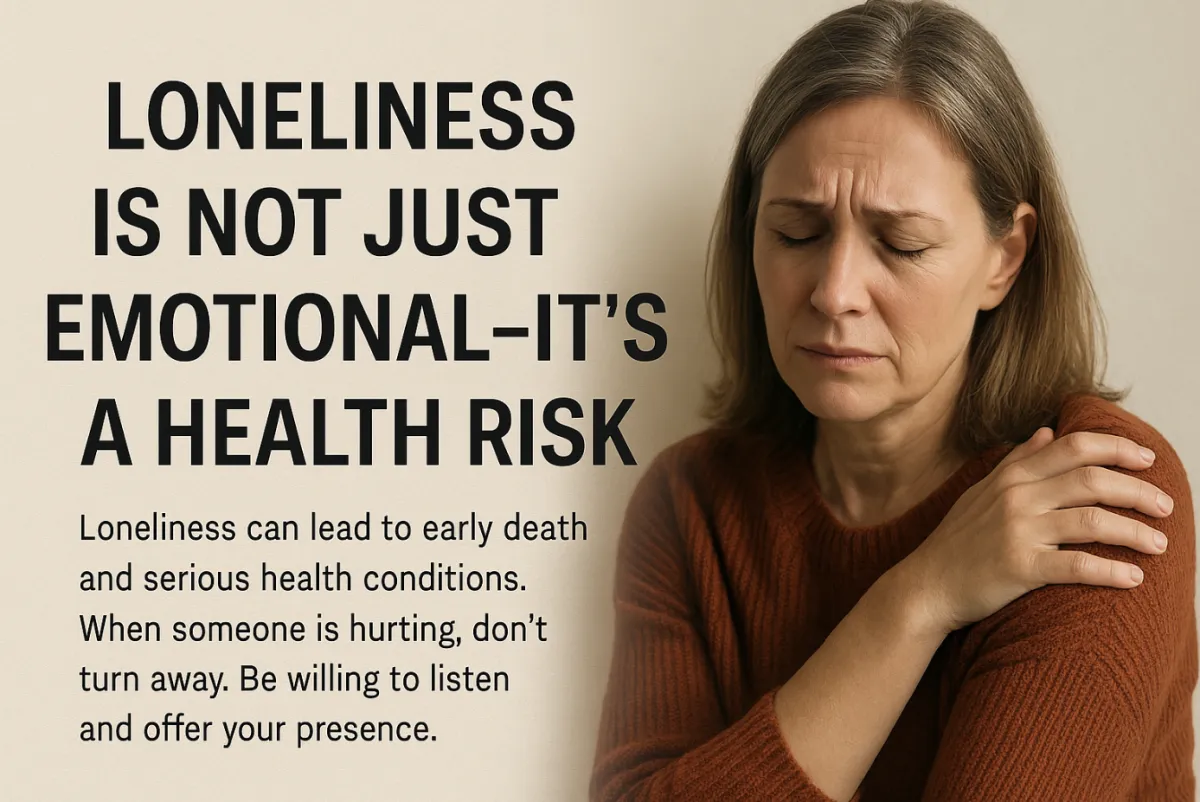
Loneliness Is Not Just Emotional—It’s a Health Risk
I recently came across research that left me stunned. It said loneliness can increase the risk of early death as much as smoking 15 cigarettes a day. Imagine that. Something as invisible as loneliness can weigh on the body so heavily that it damages the heart, weakens the immune system, and shortens life.
When I read that, my heart sank. I started thinking about the times I didn’t stop. The times I sensed someone’s sadness but kept moving. Maybe I was busy, or maybe I didn’t know what to say. And the truth is—they probably didn’t need my words at all. They just needed me to notice, to listen, or to sit with them. That thought still hurts me.
I also know from my own life that some struggles can’t just be “prayed away.” When a person feels disconnected from God, prayer itself can feel heavy or empty. That doesn’t make them less spiritual—it makes them human. And let’s be clear: mental health challenges are not only emotional or spiritual—they can also be biological. Brain chemistry, hormones, and even genetics can play a part. Ignoring this reality can cause even deeper harm.
Depression and mental health struggles are real. Scripture tells us, “Bear one another’s burdens, and so fulfill the law of Christ.” (Galatians 6:2) Bearing a burden isn’t about fixing it—it’s about being willing to sit with someone in their pain.
I’m learning not to miss those holy interruptions. Because sometimes the greatest gift we can give is not our advice, but our ear, our time, and our heart.
Reflection
Who might God be nudging you to notice this week? Could your presence, a listening ear, or even a gentle hug be the lifeline they need?
Inside Temple Keepers, we’re building rhythms of care for body, mind, and spirit. If you need a space where you are seen, supported, and strengthened in faith, you’re welcome to join us. You don’t have to carry life’s weight alone.


